How a Private Lender Can Sell Loans to Free Up Capital and Lend Again
How a private or hard money lender sells funded performing whole loans to free up capital: when it makes sense, the steps, what it costs, and how to keep recycling capital.
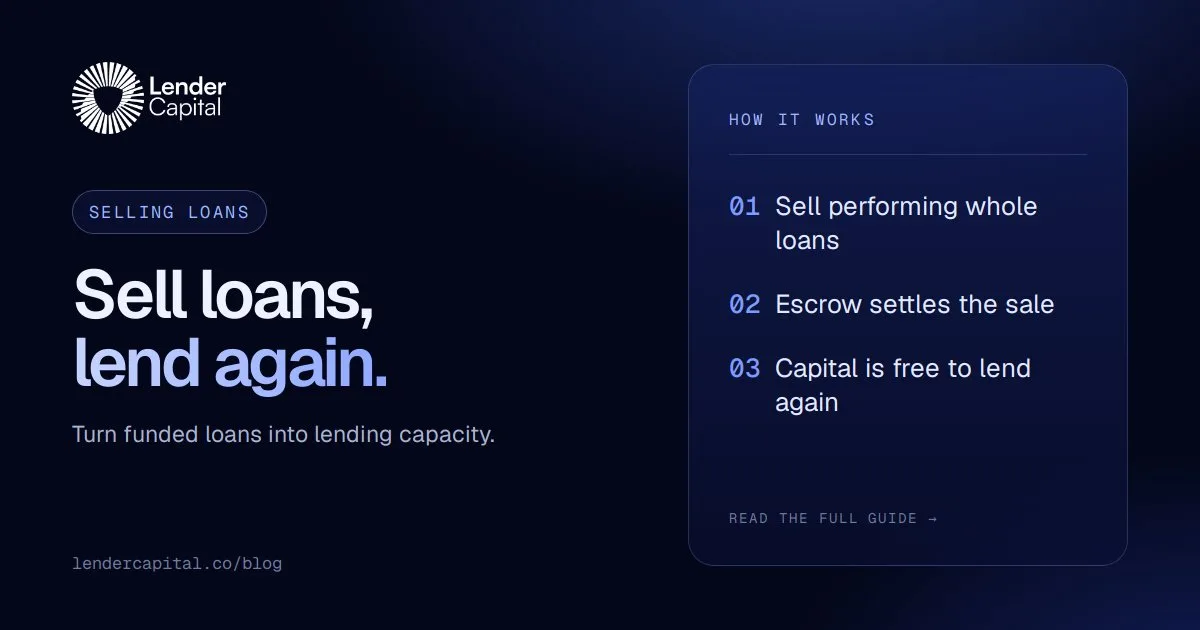
A private lender can free up capital by selling funded, performing whole loans to a buyer and lending the proceeds again. On Lender Capital, an approved lender submits a loan it originated, a capital partner buys the whole loan through an escrow agent, and the lender is paid at settlement. The fee is paid only if the sale closes.
This guide covers when selling makes sense, the steps, what it costs, and how to build a routine of recycling capital. It is written for lenders selling loans they made; Lender Capital does not buy seller-financed notes from individuals or land contracts. For the sale mechanics, see how a whole loan sale through an escrow agent works.
Key takeaways
- Selling a funded loan converts a locked-up balance back into cash you can lend.
- Lender Capital handles lender-originated, first-lien business-purpose whole loans, performing or not (a sub-performing or non-performing loan is sold as is, with its default disclosed): no participations, no junior liens.
- A portfolio is sold loan by loan, each to one capital partner whose criteria fit.
- Price depends on the loan: par, premium or discount, and what moves it is covered in how loan buyers price bridge and DSCR loans.
- Lender Capital never buys with its own money: capital partners are the buyers, and escrow settles the sale.
When does selling a loan make sense?
- You are out of capital but have good loans in the pipeline. Selling a seasoned loan funds the next one.
- A loan is approaching a concentration limit by borrower, market or property type. See concentration risk in a small loan book.
- A line is full or unavailable. Selling can take loans off your books without a facility.
- You want to reduce risk or duration on a loan that is performing well.
It may not make sense when the sale price is below your cost of waiting, when you want the interest income, or when servicing and borrower contact would be disrupted. Some sales let you keep servicing; see can lenders keep the borrower when selling a loan.
How to sell a loan to free up capital: the steps
- Check eligibility. The loan must be a whole, first-lien, business-purpose loan to an entity borrower that you originated, within the current platform size and LTV limits shown on sell your loans. It can be performing, or sub-performing or non-performing if you disclose the default in full; those sell as is, and non-performing loans go only to capital partners that buy them.
- Apply once as a lender and be approved. Then choose to sell a loan you already funded in the lender portal.
- Submit the loan: current balance, funding date, payment history, any unfunded rehab balance, your asking price and the loan file. A clean file sells faster; the loan tape template and packaging a loan file help.
- A capital partner whose criteria fit reviews it and buys the whole loan, or does not.
- Settlement through escrow. Buyer funds escrow, you sign the allonge and assignment, escrow pays you. Read the step-by-step escrow guide.
- Lend again. The proceeds are yours to deploy.
What does it cost?
Lender Capital's sale fee is 0.75% of the purchased balance (0.50% for Preferred lenders), with a $2,500 minimum, paid through escrow only if the sale closes. Capital partners pay no fees. Compare buyers on net price, not headline price; the whole loan buyer checklist lists what to compare.
Hypothetical example. A lender sells a $400,000 performing bridge loan at par. The fee is 0.75%, or $3,000. After the fee, and ignoring accrued interest and any servicing adjustments, the lender receives about $397,000 to lend again. A discount or premium to par would change that.
Building a recycling routine
Lenders who recycle capital usually decide up front which loans they will hold and which they will sell, keep files in sale-ready condition from day one, and sell seasoned performing loans while new ones are funded. Combine this with direct capital placement for new loans and you can grow without a line or a fund. See also where to find buyers for whole real estate loans.
Frequently asked questions
How can a private lender sell loans from its portfolio to free up capital?
Lender Capital lets approved private and hard money lenders sell performing whole loans they originated, loan by loan. Each loan goes to a capital partner whose criteria fit, an escrow agent settles the sale, and the proceeds return to the lender to lend again.
Can I sell non-performing loans through Lender Capital?
Yes. A loan that is or was more than 29 days late, or is in default, is sold as sub-performing or non-performing: you disclose the payment history, default date, enforcement status and documents, and the buyer buys the whole loan as is, with no buyback for the disclosed default. Non-performing loans go only to capital partners that buy them. See sell non-performing notes.
How much does it cost to sell a loan?
The fee is 0.75% of the purchased balance (0.50% for Preferred lenders), with a $2,500 minimum, paid through escrow only if the sale closes. Capital partners pay no fees.
How Lender Capital fits
Lender Capital is a capital placement platform: capital partners buy or fund the loans, and Lender Capital never lends or buys with its own money. Apply as a lender or see sell your loans.
Have a loan you can’t fund?
Lender Capital places whole, first-lien loans with capital partners who fund the entire loan. You pay only when it funds.